
Introduction to Facebook’s Laser Project
Bringing internet access to the world’s most remote regions has long challenged engineers and policymakers alike. Many communities remain disconnected due to rugged terrain, prohibitive costs, or lack of infrastructure. To address this, Facebook launched a bold initiative—using lasers to beam high-speed data across vast distances without wires or cables. This article examines the technology, vision, and real-world impact of Facebook’s Laser Project, and how it could reshape connectivity for millions.
What Is Facebook’s Laser Project?
At its core, Facebook’s Laser Project aims to deliver affordable, high-speed internet to underserved and isolated areas. By leveraging advanced laser technology, the project seeks to bypass traditional infrastructure, connecting communities where laying fiber-optic cables is impractical or too expensive.
The Vision Behind the Project
Facebook envisioned a world where everyone can participate in the digital economy, access education, and communicate freely. The Laser Project is rooted in the belief that connectivity is a fundamental right, not a privilege for urban centers alone. By focusing on technological innovation, Facebook aims to bridge the digital divide and empower people everywhere.
How Does the Laser Technology Work?
Laser-based communication may sound futuristic, but it builds on decades of optical engineering. Instead of transmitting data through cables, lasers send information wirelessly through the air, creating invisible bridges between points on the ground, drones, or balloons.
Understanding Laser-Based Communication
This technology uses highly focused beams of light to transmit data at remarkable speeds. The laser acts as a carrier, encoding digital signals and delivering them directly to a receiver, often many kilometers away.
Key Components of the Technology
Several critical elements make up the Laser Project’s system, each playing a specialized role in ensuring reliable and fast data transmission.
How Do Lasers Transmit Data?
Lasers convert electrical data into pulses of light, which travel through the atmosphere to a receiver. The receiver decodes these light signals back into digital information, enabling internet access for end users.
The Role of Free-Space Optics
Free-space optics (FSO) is the underlying principle, utilizing line-of-sight laser beams to send data through open air. Unlike radio waves, lasers offer higher bandwidth and less interference, making them ideal for spanning large distances without physical cables.
Comparing Laser and Traditional Internet Infrastructure
To understand the significance of Facebook’s approach, it’s useful to compare it with established methods like fiber-optics or satellite internet.
What Makes Laser Internet Different from Fiber Optics?
While fiber-optic cables transmit data using light, they’re physically buried or suspended, which can be costly and difficult in remote areas. Laser internet, by contrast, sends information directly through the air, eliminating the need for extensive groundwork.
Advantages of Laser-Based Systems
- Rapid deployment in hard-to-reach locations
- Minimal environmental disruption
- Lower upfront infrastructure costs
- Potential for ultra-high data rates
Limitations and Challenges
Laser systems require clear line-of-sight and can be affected by weather conditions such as fog, rain, or dust. This sensitivity to environmental factors necessitates robust engineering solutions.
Why Target Remote Areas?
Connecting rural and isolated communities is more than a technical challenge—it’s a matter of social and economic progress. Billions of people remain offline, limiting their opportunities for growth and participation in the global digital ecosystem.
Current State of Internet Access Globally
Despite advances in technology, over 2.7 billion people worldwide still lack reliable internet. Most of these individuals live in rural or geographically challenging regions, where traditional infrastructure is either unavailable or unaffordable.
The Digital Divide: Who Is Left Behind?
The digital divide disproportionately affects low-income families, indigenous populations, and those in isolated communities. Without access, these groups miss out on educational resources, telemedicine, and economic opportunities. As we discussed in our post about free government smartphones and digital inclusion, addressing this gap is crucial for equitable development.
Why Are Remote Locations Hard to Connect?
Challenging terrain, sparse populations, and harsh climates make infrastructure projects expensive and logistically complex. In many cases, the return on investment for traditional providers is too low, leaving these areas underserved.
Facebook’s Commitment to Global Connectivity
Facebook has pledged to make meaningful connectivity a reality for everyone. The Laser Project is just one piece of a broader initiative to bring affordable, high-speed internet to every corner of the planet.
Connecting the Unconnected: Facebook’s Mission
Facebook’s mission is to build technology that enables people to connect, share, and learn—regardless of where they live. The company invests heavily in research, advocacy, and partnerships to advance this goal.
Other Facebook Connectivity Initiatives
In addition to the Laser Project, Facebook has explored other innovative solutions such as high-altitude balloons, satellite constellations, and local infrastructure support. These efforts complement and extend the reach of laser-based connectivity.
A Brief History of the Laser Project
Understanding the project’s origins and milestones highlights the dedication and innovation behind Facebook’s pursuit of universal internet access.
Project Origins and Early Development
The Laser Project began within Facebook’s Connectivity Lab, where engineers sought alternatives to traditional telecom infrastructure. Early experiments focused on adapting free-space optics for long-range, high-capacity links.
Key Milestones and Achievements
Notable milestones include the first successful ground-to-ground laser link, the integration of drones as airborne relay stations, and the deployment of pilot projects in rural communities. Each breakthrough brought the vision of global connectivity closer to reality.
Who Are the Key Players in the Laser Project?
The success of such an ambitious initiative depends on a multidisciplinary team and strategic partnerships across the tech industry.
Facebook’s Connectivity Lab Team
Engineers, optical physicists, and network architects at Facebook’s Connectivity Lab drive the research and development of the laser system. Their expertise spans wireless communication, photonics, and large-scale network design.
Collaborations with Industry Partners
Facebook collaborates with aerospace firms, telecom providers, and academic institutions to refine and scale its technology. These partnerships accelerate progress and help address complex engineering challenges.
How Are Lasers Used to Deliver Internet?
The deployment of laser internet involves a combination of airborne and ground-based platforms, working together to relay data over long distances.
The Role of Drones and High-Altitude Platforms
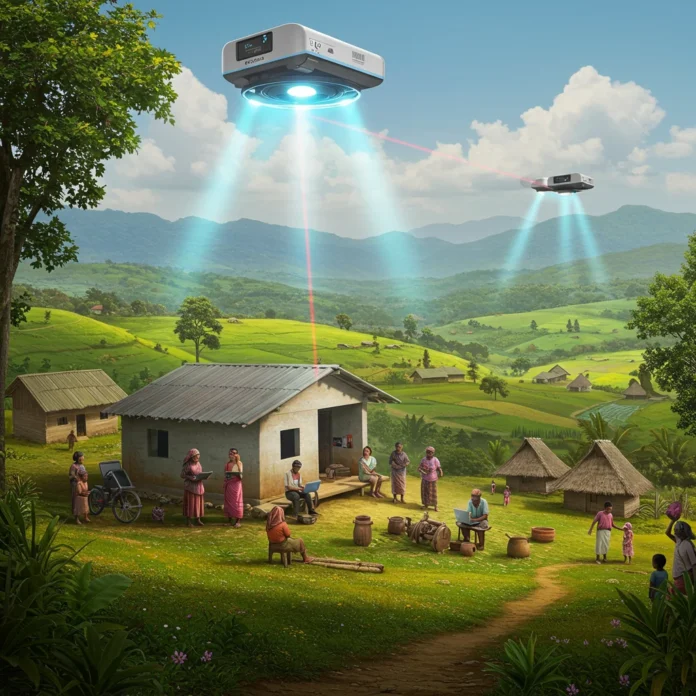
Specialized drones and balloons equipped with laser transmitters fly at high altitudes, acting as relay points between ground stations. This approach extends coverage over rugged terrain and sparsely populated areas.
Ground Stations and Network Infrastructure
Ground stations serve as the primary interface between the laser network and local users. They receive laser signals from the air, convert them into conventional internet traffic, and distribute access to homes and businesses.
How Does Data Move from Source to User?
Data typically travels from a core internet node to a high-altitude platform via laser, then down to a ground station. From there, it is delivered to end users through Wi-Fi, cellular, or fixed-line connections.
Technical Specifications of Facebook’s Laser System
Facebook’s laser system is engineered for high performance, reliability, and efficiency under challenging conditions.
Bandwidth and Speed Capabilities
The system supports gigabit-level speeds, rivaling or exceeding those offered by traditional fiber-optic connections. This enables seamless video streaming, online learning, and telemedicine—even in remote settings.
Range and Coverage Area
Laser links can span distances of several kilometers, depending on atmospheric conditions and terrain. By strategically placing relay platforms, the network can cover vast, underserved regions.
Power Consumption and Efficiency
Laser transmitters are designed for low power consumption, making them suitable for solar-powered drones and off-grid installations. Efficient energy use is a key consideration for sustainable long-term deployment.
Safety Considerations with Laser Internet
Safety is paramount when deploying high-powered optical equipment in public spaces. Facebook’s system is engineered to minimize risks for people and wildlife.
Are Laser Beams Safe for Humans and Wildlife?
The lasers used are typically eye-safe and operate well above the ground, reducing the risk of accidental exposure. Advanced sensors and fail-safes ensure beams are shut off if a potential hazard is detected.
Regulatory Compliance and Standards
Facebook works closely with regulatory bodies to comply with international safety standards for optical communications. Certification and monitoring are mandatory parts of every deployment.
Challenges Facing Facebook’s Laser Project
Deploying laser internet at scale presents a series of technological, environmental, and regulatory obstacles.
Technical Hurdles and Engineering Problems
Maintaining stable laser links over long distances requires precise alignment and adaptive optics to compensate for atmospheric distortion. Equipment must also withstand harsh environmental conditions.
Weather and Environmental Factors
Rain, fog, and dust can scatter or absorb laser beams, reducing reliability. Redundant links and hybrid systems help mitigate these issues, but weather remains a significant challenge.
Cost and Scalability Issues
While the technology reduces infrastructure costs compared to fiber, initial investment in research, equipment, and deployment is substantial. Achieving economies of scale will be essential for widespread adoption.
Regulatory and Legal Barriers
Navigating international regulations on spectrum, airspace, and safety can delay projects. Facebook must coordinate with governments and telecom authorities to secure permissions and licenses.
How Is the Project Being Tested?
Rigorous testing and real-world trials are crucial to refining the laser system and proving its viability under diverse conditions.
Pilot Programs and Field Trials
Facebook has launched pilot projects in rural Africa, South America, and Asia, collaborating with local partners to deliver internet via laser links. These trials assess performance, reliability, and user experience.
Lessons Learned from Early Deployments
Early deployments revealed the importance of robust hardware, adaptive weather solutions, and community engagement. Feedback from users informed iterative improvements and new deployment strategies.
Success Stories: Where Has It Worked?
The impact of Facebook’s Laser Project is most visible in communities that previously lacked reliable connectivity.
Case Studies of Remote Area Connectivity
In certain villages, students now access online classrooms, farmers receive weather updates, and clinics consult with doctors remotely—all thanks to stable, high-speed internet. These stories underscore the transformative power of connectivity.
Community Impact and Feedback
Local feedback has been overwhelmingly positive, with users citing improved access to education, healthcare, and economic opportunities. As one expert put it:
As experts often say:
“Access to information is the foundation of progress. When you connect a community, you unlock its potential.”
Comparing Facebook’s Laser Project to Other Initiatives
Laser-based internet is not the only approach to rural connectivity. It’s helpful to consider how this project compares to other leading initiatives.
How Does It Stack Up Against Starlink and Loon?
Unlike satellite internet (e.g., Starlink) or high-altitude balloons (e.g., Loon), Facebook’s lasers offer lower latency and higher bandwidth over targeted areas. Each approach has unique strengths, but lasers excel in delivering fast, localized service.
Unique Advantages of Facebook’s Approach
The flexibility to deploy lasers on drones, towers, or rooftops enables rapid scaling. The system’s modularity also allows integration with smart technologies—a consideration similar to the modular concepts we discussed in our modular smart home guide.
Potential Impact on Education and Healthcare
High-speed internet can revolutionize remote communities, especially in education and healthcare.
How Can Internet Access Transform Remote Communities?
Reliable connectivity provides students with access to online courses, digital textbooks, and virtual classrooms. Healthcare workers can consult specialists, manage patient data, and deliver telemedicine services even in isolated areas.
Stories of Educational Empowerment
Teachers in rural schools report that students now participate in global science competitions, video conferences, and virtual field trips. These opportunities foster a sense of connection and ambition.
Improving Healthcare Delivery with Connectivity
Clinics in connected regions use telehealth platforms to consult with urban specialists, access medical databases, and coordinate emergency responses, vastly improving patient outcomes.
Economic Opportunities Created by Internet Access
Internet connectivity acts as a catalyst for entrepreneurship, job creation, and local economic growth.
Entrepreneurship and Small Business Growth
Local artisans, shop owners, and service providers can reach new customers online, process digital payments, and access business resources. Affordable smartphones, such as those available through rent-to-own smartphone programs, further expand these opportunities.
Job Creation and Workforce Development
Online training, remote work, and digital marketplaces enable individuals to develop new skills and pursue careers without leaving their communities. This leads to a more vibrant, resilient local economy.
Environmental Considerations of Laser Internet
Deploying internet infrastructure in remote areas must balance technological progress with environmental stewardship.
Energy Efficiency Compared to Traditional Networks
Laser systems are often more energy-efficient than large-scale fiber networks, especially when powered by renewable sources like solar panels. This reduces the environmental footprint of expanding connectivity.
Potential Ecological Impacts
By minimizing land disturbance and avoiding the need for extensive cabling, laser internet preserves natural habitats. Ongoing monitoring ensures wildlife and local ecosystems are protected throughout deployment.
Privacy and Security in Laser-Based Internet
As with any communication technology, privacy and security are paramount concerns.
Is Laser Internet More Secure?
Laser beams are highly directional, making them difficult to intercept or jam compared to traditional radio-based links. This intrinsic security is a notable advantage for sensitive communications.
Potential Risks and Mitigation Strategies
While lasers are harder to tap, physical security of ground stations and endpoints remains essential. Encryption, authentication, and continuous monitoring are used to safeguard user data.
What Does the Future Hold for Facebook’s Laser Project?
The future of laser-based connectivity is bright, with ongoing innovation and expansion on the horizon.
Scaling Up: Plans for Global Expansion
Facebook plans to scale its laser technology to reach millions more in the coming years, partnering with governments, NGOs, and local telecoms to accelerate deployment.
Innovations on the Horizon
Research continues into higher-capacity lasers, adaptive optics, and integration with emerging technologies like 5G and smart home systems. These advancements promise even faster, more reliable service in the future.
How Can You Get Involved or Benefit?
Individuals, communities, and organizations have various avenues to participate in or benefit from the Laser Project.
Opportunities for Local Communities
Communities can advocate for inclusion in pilot programs, leverage new connectivity for local development, and access resources to improve digital literacy. Those interested in maximizing their connected lifestyles can also consider integrating smart technologies, as outlined in our article on essential smart home gadgets.
Partnerships for NGOs and Governments
NGOs and government agencies can collaborate with Facebook to identify target regions, provide logistical support, and develop educational or economic programs that harness the power of connectivity.
Common Questions About Facebook’s Laser Project
Many people are curious about the affordability, reliability, and timeline for this technology.
Will Laser Internet Be Affordable?
Facebook aims to keep costs low by minimizing infrastructure and leveraging economies of scale. While initial deployments may target strategic regions, the long-term goal is universal, affordable access.
How Reliable Is the Connection?
Laser links offer high-speed, low-latency connections, but weather and environmental factors can impact reliability. Redundant systems and hybrid networks are used to maintain consistent service.
How Soon Will It Be Available in My Area?
Availability depends on ongoing trials, partnerships, and regulatory approvals. Facebook continues to expand its reach, with new deployments announced regularly.
How to Book on Viator
If you are inspired to plan your trip or find tours in areas benefiting from enhanced connectivity, Viator offers a convenient platform for booking activities and experiences worldwide. Their site makes it easy to search, compare, and reserve unique adventures, even in remote or newly connected destinations.
For travelers eager to explore off-the-beaten-path locations, Viator’s extensive listings can help ensure your journey is seamless and memorable. You can book activities in advance and discover new opportunities as connectivity expands.
Conclusion: The Promise and Potential of Facebook’s Laser Project
Facebook’s Laser Project represents a significant leap forward in the quest for universal internet access. By leveraging cutting-edge laser technology, the initiative has the potential to transform lives, bridge the digital divide, and unlock opportunities for millions in remote regions. The journey is ongoing, but the impact is already being felt in education, healthcare, entrepreneurship, and beyond.
At Izase, we believe in the power of technology to connect and empower. Stay informed about innovations that could shape your future by visiting Izase.
“Disclaimer: This information is accurate to the best of our knowledge; however, there may be changes or mistakes. Please verify exact details on the Viator booking page.”